In this article
- 🐉 Your Birth-Year Animal Is the Beginning of the Story
- 🧭 What Is the Japanese Zodiac?
- 📜 How the Japanese Zodiac Developed
- 🪐 The Astronomical Connection: Jupiter and Twelve-Year Time
- 📅 When Does a Japanese Zodiac Year Begin?
- 🐀 Rat: The Resourceful Observer
- 🐂 Ox: The Patient Builder
- 🐅 Tiger: The Courageous Challenger
- 🐇 Rabbit: The Perceptive Diplomat
- 🐉 Dragon: The Expansive Visionary
- 🐍 Snake: The Deliberate Strategist
- 🐎 Horse: The Energetic Explorer
- 🐑 Sheep: The Considerate Creator
- 🐒 Monkey: The Inventive Problem-Solver
- 🐓 Rooster: The Discerning Communicator
- 🐕 Dog: The Principled Protector
- 🐗 Boar: The Wholehearted Pursuer
- 🧩 Why People Born in the Same Animal Year Differ
- ♻️ Why the Complete Cycle Lasts Sixty Years
- 🏟️ A Familiar Japanese Landmark Contains the Cycle
- 📈 The Japanese Zodiac in Stock-Market Culture
- 🔍 What Zodiac Market Statistics Can—and Cannot—Show
- 🌱 Thinking About Expansion, Maturity, and Renewal
- 🌍 Using the Cycle to Examine Political and Social Change
- ⚔️ Why Historical Events Carry Zodiac Names
- 👶 The Fire Horse: When Belief Changed Behavior
- 🕰️ The Branches Also Describe Time and Direction
- 🧠 How to Explore Your Sign Without Reducing Yourself to It
- 📚 The Depth of the Japanese Zodiac
🐉 Your Birth-Year Animal Is the Beginning of the Story
You may already know whether you were born in the Year of the Dragon, Horse, or Rabbit. Perhaps the description sounded familiar. Perhaps it left you wondering how millions of people born in the same year could possibly share one personality.
The Japanese zodiac becomes much more interesting when you look beyond that first description.
Its twelve animals belong to a larger system for organizing time. They connect individual birth years with recurring sequences, seasonal thinking, cultural traditions, and a sixty-year calendar. Their influence also reaches into Japanese financial commentary, where animal-year sayings remain part of the language used to discuss the stock market.
The same framework can provide a way to step back from daily events and compare different periods of history. Questions about expansion, consolidation, institutional strain, and renewal become easier to organize when time is viewed through several overlapping cycles.
That does not establish a timetable for the next recession or political upheaval. It does reveal why the zodiac has remained useful as a cultural language for thinking about change.
To understand its depth, we need to begin with the difference between the twelve animals most people recognize and the calendar structure underneath them.
🧭 What Is the Japanese Zodiac?
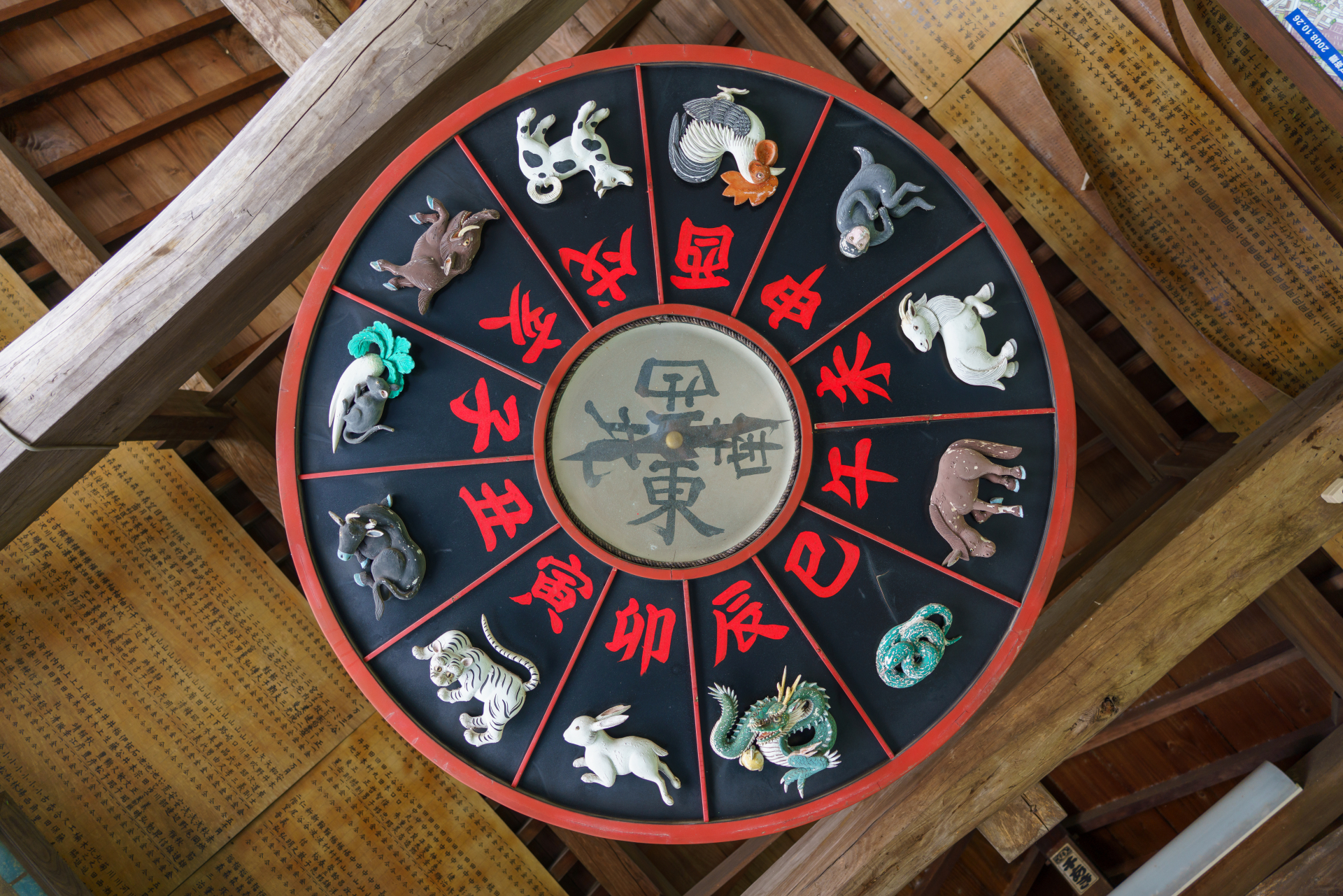
The Japanese zodiac is commonly called jūnishi, written 十二支, meaning the Twelve Earthly Branches.
The familiar animal sequence is:
Rat, Ox, Tiger, Rabbit, Dragon, Snake, Horse, Sheep, Monkey, Rooster, Dog, and Boar.
Each animal represents one position in a repeating twelve-year cycle. Someone born in a Rat year shares that animal with people born twelve, twenty-four, or thirty-six years earlier or later.
In Japan, the final animal is generally represented as a wild boar, or inoshishi. The eighth animal is usually described as a sheep, or hitsuji. English-language guides to related East Asian traditions may instead use Pig and Goat.
The word eto, written 干支, is also widely used when discussing a person’s birth-year animal. Strictly speaking, however, eto refers to the combination of two sequences: the Ten Heavenly Stems and the Twelve Earthly Branches.
That distinction matters. Your animal tells you where your birth year falls within a twelve-part sequence. The complete stem-and-branch designation places it within a sixty-part sequence.
The zodiac animals are therefore an accessible entrance to a considerably larger calendar.
📜 How the Japanese Zodiac Developed
The system used in Japan has its roots in ancient Chinese calendrical traditions.
Before the animals became familiar personality symbols, the stems and branches functioned as ways of counting and identifying units of time. The branch characters were not originally ordinary animal names. Animals were associated with those positions as the tradition developed.
This helps explain a detail that can confuse beginners: 子 is the branch associated with the Rat, while the ordinary Japanese word for a rat or mouse is nezumi. Likewise, 巳 is associated with the Snake, while the animal itself is called hebi.
The calendar symbol and the animal name belong to different layers of the system. Japan’s National Astronomical Observatory explains that the branches were used for months, times, and directions, and were subsequently associated with animals.
Calendrical knowledge reached Japan from China through the Korean Peninsula. The National Diet Library describes records of Japan seeking calendar specialists and calendar texts from Baekje in 553. It also notes the traditional account that Japan’s first calendar was produced in 604.
These dates belong to a gradual process of transmission, adoption, and institutional development. They should not be treated as the single moment when every aspect of Japanese zodiac culture appeared.
As calendar-making became part of government administration, astronomical observation, calendrical calculation, and divination were closely connected. The court’s Onmyōryō, often translated as the Bureau of Yin and Yang, had responsibilities that included the calendar, astronomy, and divination.
For people living within that world, a calendar carried practical and symbolic authority. It helped organize public life while also providing interpretations of appropriate timing.
A date could therefore have several meanings at once: its place in the agricultural year, its position within a repeating sequence, and its perceived suitability for a particular activity.
The twelve animals survived because they made part of that complicated structure memorable. An animal is easier to recognize, depict, and discuss than an abstract position in a calendar.
🪐 The Astronomical Connection: Jupiter and Twelve-Year Time
The twelve-year structure also has a historical connection with astronomy.
Jupiter takes approximately 11.86 years to orbit the Sun. In ancient Chinese astronomical traditions, its position was used in a method of identifying years that was associated with a twelvefold division of the sky.
Japan’s National Astronomical Observatory explains that this developed into a system using the twelve branches. Eventually, the year sequence was continued by counting through the cycle rather than by keeping each designation tied to Jupiter’s observed position.
The modern animal-year cycle is consequently a fixed calendar sequence. It does not shift each year to match Jupiter’s exact astronomical location.
This distinction gives the tradition greater depth. Its history contains observation, mathematical organization, and symbolic interpretation, all developing over time.
It also explains why the Japanese zodiac should not simply be treated as twelve Western zodiac signs assigned to entire years. The two systems organize time differently and have different historical structures.
📅 When Does a Japanese Zodiac Year Begin?
For the modern Japanese birth-year convention used in this article, the animal changes on January 1.
Japan adopted the Gregorian calendar in 1873. Before that, it used a lunisolar calendar, which coordinated lunar months with the seasonal year. The National Diet Library documents the transition from the old calendar to the new system.
However, a cultural birth-year chart and a technical divination chart do not always use the same boundary.
Some systems of Four Pillars interpretation use Risshun, the beginning of spring, as the boundary for the year pillar. Other historical approaches use different definitions of the year’s beginning. The practitioner tradition and its calculation rules therefore matter, particularly for January and early-February birthdays.
For example, a person born in January 2026 is a Horse under the January-to-December convention used in the table below. A Four Pillars calculation using the beginning of spring may assign that person a year pillar belonging to the previous cycle year.
These results answer different questions.
The table at the end of this article is a straightforward modern Japanese birth-year reference. It is not a substitute for calculating a complete traditional birth chart.
🐀 Rat: The Resourceful Observer
Japanese branch: 子
Branch reading: Ne
Animal name: Nezumi
Example birth years: 1960, 1972, 1984, 1996, 2008, 2020
The Rat represents awareness of possibilities: noticing an opening, finding a useful connection, or recognizing value before it becomes obvious.
As a personality symbol, it suggests someone who learns through observation and responds quickly to changing circumstances. Rat-type resourcefulness can appear in social intelligence, practical ingenuity, or the ability to make limited resources go further.
The same sensitivity can make it difficult to switch off. When you see several possible outcomes at once, choosing one path may feel like giving up valuable alternatives.
The Rat’s developmental question is about sufficiency. What deserves continued attention, and what can you stop monitoring?
Its strongest expression combines adaptability with a clear sense of priorities. Being prepared becomes more useful when it supports a life you actually want to live.
🐂 Ox: The Patient Builder
Japanese branch: 丑
Branch reading and animal name: Ushi
Example birth years: 1961, 1973, 1985, 1997, 2009, 2021
The Ox represents sustained effort, reliability, and the ability to continue after the excitement of beginning has faded.
An Ox-style personality often prefers to understand what is required and then work through it methodically. Trust develops through repeated evidence: showing up, keeping a promise, and producing something dependable.
Its strength can be easy to overlook in environments that reward speed and visibility. Yet many projects survive because someone is willing to maintain standards when others become distracted.
The difficult side appears when endurance becomes an obligation to tolerate everything. Persistence can turn into resistance, especially when changing direction feels like admitting that earlier effort was wasted.
The Ox’s deeper lesson concerns flexibility within commitment. A goal can remain meaningful even when the method needs to change.
🐅 Tiger: The Courageous Challenger
Japanese branch: 寅
Branch reading and animal name: Tora
Example birth years: 1962, 1974, 1986, 1998, 2010, 2022
The Tiger symbolizes courage, initiative, and a strong response to restriction.
In personality interpretation, it describes a person who wants room to act and may become particularly energized when a situation calls for a difficult decision. A Tiger’s conviction can encourage others to move beyond hesitation.
This symbolism also contains sensitivity. Someone who reacts strongly to injustice may be responding from a deeply personal sense of what people deserve.
The challenge is distinguishing a necessary confrontation from the urge to resist being controlled. A disagreement does not always require a battle, and accepting support does not diminish independence.
The Tiger’s mature strength lies in deliberate courage: choosing a cause carefully, understanding the consequences, and remaining accountable after the first bold move.
🐇 Rabbit: The Perceptive Diplomat
Japanese branch: 卯
Branch reading: U
Animal name: Usagi
Example birth years: 1963, 1975, 1987, 1999, 2011, 2023
The Rabbit represents sensitivity to atmosphere, social awareness, and an appreciation for a life that feels emotionally and aesthetically comfortable.
A Rabbit-style personality may notice the shift in a room before anyone names it. This can support diplomacy, thoughtful communication, and an ability to make other people feel considered.
Its gentleness should not be confused with having no preferences. Often, the Rabbit knows exactly what feels wrong but prefers to avoid a disruptive confrontation.
That creates a familiar tension: maintaining harmony can gradually become suppressing an important need.
The Rabbit’s growth comes through expressing a clear preference before resentment takes over. Its perceptiveness becomes especially valuable when paired with the confidence to say what would make a situation better.
🐉 Dragon: The Expansive Visionary
Japanese branch: 辰
Branch reading and animal name: Tatsu
Example birth years: 1964, 1976, 1988, 2000, 2012, 2024
The Dragon brings scale to the zodiac’s symbolic vocabulary.
It suggests ambition, presence, and the desire to participate in something that feels significant. A Dragon-style personality may be drawn to a large project, a visible role, or an idea with the potential to reach beyond its immediate surroundings.
The gift is the ability to make possibility feel substantial. Other people may become more willing to participate because someone has given the vision a compelling form.
The pressure comes from feeling that ordinary progress is insufficient. Expectations can grow faster than the structure needed to support them.
The Dragon’s practical task is to give ambition a foundation: collaborators, realistic stages, and enough patience to let an impressive idea become a functioning reality.
🐍 Snake: The Deliberate Strategist
Japanese branch: 巳
Branch reading: Mi
Animal name: Hebi
Example birth years: 1965, 1977, 1989, 2001, 2013, 2025
The Snake represents observation, selectivity, and change that begins beneath the surface.
As a personality symbol, it suggests someone who prefers to understand a situation before revealing a position. This can look like reserve, but it may also reflect careful attention to timing and consequences.
The Snake is useful as an image of revision. Shedding a skin requires leaving behind something that once offered protection.
Its difficult expression appears when caution becomes suspicion or when a person keeps refining a plan without allowing it to meet the outside world.
The Snake’s growth involves recognizing when there is enough information to proceed. A strategy becomes meaningful through engagement, including the possibility that new evidence will require another adjustment.
🐎 Horse: The Energetic Explorer
Japanese branch: 午
Branch reading and animal name: Uma
Example birth years: 1966, 1978, 1990, 2002, 2014, 2026
The Horse represents movement, initiative, and the need to experience life directly.
A Horse-style personality may think most clearly while doing something: meeting people, traveling, testing an idea, or changing the immediate environment. Freedom is often connected to the ability to choose a direction without feeling excessively contained.
Its enthusiasm can be contagious. A stagnant situation may begin to move because someone is willing to bring energy into it.
The challenge concerns continuity. Starting again can feel more appealing than working through the repetitive middle of an existing commitment.
The Horse’s mature expression combines freedom with a sustainable rhythm. Rest, follow-through, and responsibility can protect its independence by keeping energy available for the things that matter.
🐑 Sheep: The Considerate Creator
Japanese branch: 未
Branch reading and animal name: Hitsuji
Example birth years: 1967, 1979, 1991, 2003, 2015, 2027
The Sheep symbolizes sensitivity to relationships, a creative response to experience, and a preference for cooperation over unnecessary conflict.
A Sheep-style personality may contribute through the quality of an environment: how people are welcomed, how a space feels, or how an idea is expressed. Its creativity can be practical and interpersonal as well as artistic.
Because it notices the emotional cost of friction, it may do considerable work to keep a group functioning.
The difficulty arises when consideration becomes automatic self-sacrifice. Other people can become accustomed to receiving support without realizing how much it requires.
The Sheep’s developmental task is to make its own needs visible. Cooperation becomes more durable when care includes the person providing it.
🐒 Monkey: The Inventive Problem-Solver
Japanese branch: 申
Branch reading and animal name: Saru
Example birth years: 1968, 1980, 1992, 2004, 2016, 2028
The Monkey represents experimentation, mental agility, and a willingness to question whether the obvious method is the best one.
A Monkey-style personality often learns by trying, comparing, and modifying. It may find an unusual solution because it does not feel obliged to approach a problem through the expected route.
Humor can be part of that intelligence. A different framing may make a difficult situation easier to understand.
The challenge is staying interested after the puzzle has been solved. Cleverness can also become a way to avoid vulnerability, especially when sincerity feels less controllable than wit.
The Monkey’s strongest expression gives ingenuity a purpose. An inventive solution becomes more valuable when someone remains present to implement it and take responsibility for its effects.
🐓 Rooster: The Discerning Communicator
Japanese branch: 酉
Branch reading and animal name: Tori
Example birth years: 1969, 1981, 1993, 2005, 2017, 2029
The Rooster symbolizes discernment, presentation, and the willingness to make a standard visible.
A Rooster-style personality may notice what is unfinished, inconsistent, or poorly communicated. This supports careful preparation, clear expression, and pride in doing something properly.
Its directness can be refreshing. When a group avoids naming an obvious problem, the Rooster’s voice may provide the clarity needed to act.
The difficulty lies in how that clarity is delivered. An accurate observation can lose its usefulness if another person experiences it only as criticism.
The Rooster’s growth concerns proportion and timing. It can preserve high standards while recognizing that people learn more effectively when an improvement feels possible.
🐕 Dog: The Principled Protector
Japanese branch: 戌
Branch reading and animal name: Inu
Example birth years: 1970, 1982, 1994, 2006, 2018, 2030
The Dog represents loyalty, fairness, and a strong awareness of responsibility toward other people.
A Dog-style personality may be particularly attentive to whether words and actions match. Trust grows through consistency, while broken promises can remain difficult to forget.
Its protective instinct can serve a relationship, a community, or a principle. The Dog may be willing to speak when someone else is being treated unfairly.
The challenge appears when vigilance becomes a permanent state. Caring about an outcome can lead to carrying responsibilities that were never yours alone.
The Dog’s mature strength includes discernment about what it can influence. Loyalty remains healthier when it leaves room for rest, reasonable boundaries, and the possibility of rebuilding trust.
🐗 Boar: The Wholehearted Pursuer
Japanese branch: 亥
Branch reading: I
Animal name: Inoshishi
Example birth years: 1971, 1983, 1995, 2007, 2019
The Boar represents wholehearted engagement, sincerity, and the determination to move toward something that feels worthwhile.
A Boar-style personality may prefer a clear intention to a complicated social game. When it commits, its involvement can be generous and substantial.
This directness gives the symbol its strength. People often know where they stand because the Boar’s investment is difficult to mistake.
The difficult side emerges when commitment outlasts reflection. Continuing with full force may feel more natural than pausing to ask whether circumstances have changed.
The Boar’s growth involves preserving sincerity while remaining receptive. A change of course can be an expression of integrity when it reflects a more accurate understanding of the situation.
🧩 Why People Born in the Same Animal Year Differ
These portraits are symbolic interpretations, rather than twelve fixed descriptions into which every person must fit.
A birth year is a broad category. It tells you very little about someone’s upbringing, circumstances, choices, or individual history.
Even within traditional divination, the year animal is only one component. Four Pillars systems, known in Japan as Shichū Suimei, work with combinations associated with the year, month, day, and hour of birth. The relationships among those components create a much more detailed interpretation than a single animal label.
The year of birth can introduce a theme. It cannot, by itself, describe a whole person.
That is also why recognizing an animal’s difficult side can be more useful than collecting flattering adjectives. The point is to notice a pattern: when persistence becomes rigidity, when sensitivity becomes avoidance, or when independence makes collaboration unnecessarily difficult.
Used this way, the zodiac gives a reader questions worth considering rather than a personality verdict.
♻️ Why the Complete Cycle Lasts Sixty Years
The twelve branches combine with the ten stems to produce sixty distinct pairings.
Both sequences advance together. After twelve years, the animal repeats, but the stem is different. The original stem-and-branch combination returns after sixty years.
For example, 1924, 1984, and 2044 share the designation 甲子. In Japanese, this can be read as kinoe-ne: the Yang Wood Rat.
The stems are associated with Wood, Fire, Earth, Metal, and Water, with a yin and yang expression for each. These are traditional categories of correspondence rather than modern chemical elements.
The National Diet Library describes the ten stems, their yin-yang and five-phase associations, and their combination with the twelve branches.
This structure is also the basis of kanreki, the celebration associated with turning sixty: a return to the calendrical combination of one’s birth year.
The idea is striking because it makes a lifetime part of the calendar’s architecture. At twelve, twenty-four, and thirty-six, an animal returns. At sixty, the complete year designation returns.
The same framework can be used to organize a family history, a company’s development, or a comparison between different generations.
Its value lies in the questions those intervals encourage. What has been carried forward? Which assumptions have become outdated? What would beginning again mean under present conditions?
🏟️ A Familiar Japanese Landmark Contains the Cycle
Koshien Stadium offers a concrete example of how this calendar entered public culture.
The stadium opened in 1924, a 甲子 year. Its name combines those two characters with 園, meaning a garden or grounds. The stadium’s official history explains that the first stem and first branch were regarded as an auspicious combination.
A name recognized by generations of baseball fans therefore preserves a position within the sixty-year calendar.
This is one reason the zodiac’s cultural importance can be missed by a guide focused entirely on personality. Its language is embedded in names and historical memory, including places where a visitor might never think to look for it.
📈 The Japanese Zodiac in Stock-Market Culture
The connection between zodiac years and Japanese financial culture is real and well documented.
A traditional market saying assigns an image to each animal year. A securities-company article published on Japan Exchange Group’s financial education website explains a sequence in which Dragon and Snake years are associated with market highs, Horse with decline, Sheep with patience, Monkey and Rooster with commotion, Dog with cheerfulness, Boar with consolidation, Rat with prosperity, Ox with stumbling, Tiger with forceful movement, and Rabbit with a leap.
The exact wording and interpretation can vary, but the saying remains part of Japanese market commentary.
Its appeal is understandable. Markets are difficult to narrate while they are unfolding. A familiar sequence supplies images for acceleration, hesitation, exuberance, and adjustment.
Those images can prompt useful questions. Does optimism depend on improving earnings, or mainly on confidence that prices will continue rising? Has a period of rapid expansion created obligations that become difficult to sustain? Is a quiet market consolidating, or has participation weakened?
These are questions about economic conditions and behavior. They become useful when investigated with evidence.
The animal year supplies a cultural frame for the discussion. It does not establish the answer.
🔍 What Zodiac Market Statistics Can—and Cannot—Show
Financial writers sometimes group historical stock-market returns by zodiac animal.
This can produce interesting descriptive results. However, a pattern in a historical sample needs careful interpretation.
A Nomura Securities article published on Japan Exchange Group’s website examined eight Dragon-year observations. It reported four positive years and four negative years, even though the average return was positive.
That example shows why an average and a probability of success are different things. A few large gains can raise an average without making gains consistently likely.
A meaningful analysis would also need to examine how the sample was selected, whether dividends were included, which index was used, and whether the result survives outside the period in which it was first noticed.
For a sixty-year pairing, the problem becomes even sharper: modern financial datasets contain very few repetitions.
The economic connection is therefore best understood through several layers. There is an established tradition of market interpretation. There are testable claims about historical returns. There are also actual economic mechanisms involving credit, investment, production, employment, and expectations.
These layers can be studied together without assuming they are interchangeable.
Japan’s Cabinet Office dates business-cycle peaks and troughs using economic indicators and formal procedures. It does not define an economic cycle as a fixed twelve-year interval.
🌱 Thinking About Expansion, Maturity, and Renewal
The zodiac can still be productive as a symbolic model of change.
One contemporary approach is to use its recurring structure to ask about the development of an activity: an idea becomes viable, resources accumulate, participation widens, growth becomes more complicated, and eventually some part of the system needs revision.
That is an interpretive exercise, rather than a claim that every company or economy must pass through twelve predetermined annual stages.
For a business owner, the useful question might concern the relationship between expansion and capacity. Has demand grown faster than the organization’s ability to deliver? Are reliable routines supporting the next stage, or preserving an arrangement that no longer works?
For a household, the issue might be whether a period of accumulation has given way to a need for flexibility. For a community, it might involve whether shared institutions still reflect the people they serve.
The animal symbols offer different perspectives on these questions. The Ox draws attention to maintenance. The Monkey suggests experimentation. The Dog raises questions of trust. The Snake invites consideration of what needs to be shed.
Their usefulness comes from directing attention. The real situation determines which interpretation deserves weight.
🌍 Using the Cycle to Examine Political and Social Change
A longer calendar can also help organize historical comparison.
Daily political coverage emphasizes immediate developments: an election, a leadership dispute, a protest, or a policy announcement. A twelve-year comparison encourages a reader to examine what has changed across a broader interval.
A sixty-year comparison makes it possible to ask different questions. Which institutions have survived? Which groups now hold influence? What problems have been inherited by people who did not create them?
The stem-and-branch system can be a powerful tool for keeping those comparisons organized. Its repeating labels make it possible to place periods beside one another and look for both similarities and differences.
For example, 1868, 1928, and 1988 share the designation 戊辰. That calendrical fact does not make their political circumstances equivalent. It provides a consistent interval from which a comparison can begin.
A careful analysis would then investigate the evidence: state capacity, social organization, economic pressures, technology, international relationships, and the distribution of opportunity.
The strongest use of the cycle is to improve the question being asked. A weak use begins with a conclusion and selects only the historical events that make it look convincing.
⚔️ Why Historical Events Carry Zodiac Names
The Boshin War illustrates the calendar’s direct connection with political history.
“Boshin” is a reading of 戊辰, the stem-and-branch designation for 1868. Japan’s National Archives describes the conflict beginning that year and continuing into 1869 as the new government established its position against forces associated with the former shogunate.
The event’s name preserves its starting year within the traditional calendar.
There were also historical beliefs that certain combinations signaled political transformation. The National Astronomical Observatory discusses the idea of revolution associated with 辛酉 years.
That is evidence that calendrical interpretation formed part of historical thinking about political legitimacy and change. It is not evidence that a particular combination reliably causes a revolution.
The distinction matters because beliefs themselves belong to history. People can organize expectations around a date, attach meaning to an event, or reinterpret the past through a calendar they already consider significant.
The zodiac can therefore be studied as both a chronological system and a language through which change was understood.
👶 The Fire Horse: When Belief Changed Behavior
One of the clearest examples of a zodiac belief producing a measurable social effect is the Fire Horse year.
The combination 丙午, read hinoe-uma in Japanese, returns every sixty years. It occurred in 1906, 1966, and 2026.
A discriminatory superstition attached to this combination portrayed women born in such years as dangerous to their husbands. That claim has no sound basis for judging anyone’s character.
The social consequences of the belief were nevertheless real. Japan’s Statistics Bureau describes a sharp decline in births in 1966, when the number fell by nearly a quarter from the previous year. The bureau connects this decline with couples avoiding births because of the superstition.
This example reveals a particularly important relationship between symbolism and society.
The calendar did not give children a harmful personality. A belief about the calendar influenced decisions made by adults. Those decisions changed the size of a birth cohort.
That is a historical mechanism we can examine: interpretation, expectation, behavior, and a demographic outcome.
It also gives discussions of long-term cycles a firmer foundation. Sometimes the most consequential connection is the effect a shared belief has on human choices.
🕰️ The Branches Also Describe Time and Direction
The twelve branches extend beyond birth years.
In traditional correspondences, they can identify divisions of the day and directions. The National Astronomical Observatory lists the Rat with north and the time around midnight, the Rabbit with east and the early morning, the Horse with south and the time around noon, and the Rooster with west and the late afternoon.
Its modern equal-hour reference assigns two hours to each branch: Rat from 11 p.m. to 1 a.m., Ox from 1 a.m. to 3 a.m., and so on. Historical Japanese timekeeping also involved seasonal practices, so these equal-hour equivalents should not be projected unchanged onto every historical setting.
This layered use helps explain the system’s durability. A small set of signs could participate in several kinds of orientation.
A branch could help locate a year within a cycle, a time within a day, or a direction within a spatial framework.
For a modern reader, that makes the zodiac a useful introduction to a broader way of thinking in correspondences. A single symbol can carry several relationships, depending on the context in which it is being used.
🧠 How to Explore Your Sign Without Reducing Yourself to It
Begin with your birth-year animal, then ask which parts of the symbolism describe an actual pattern in your life.
An Ox might recognize the satisfaction of steady work while also noticing how difficult it feels to leave an unproductive commitment. A Rabbit might identify with social awareness but decide that a particular relationship needs a clearer boundary. A Dragon might recognize a large ambition and ask what structure would help it survive.
Those are specific reflections. They leave room for experience, choice, and change.
You can also compare your life at twelve-year intervals. The purpose is not to manufacture an identical event at each return. It is to notice how your relationship with a recurring concern has developed.
At one age, independence may mean leaving home. Later, it may mean changing a work arrangement or learning to ask for help without surrendering judgment.
A symbol can remain recognizable while its expression changes.
The same principle applies to historical comparison. Repeated questions about authority, resources, belonging, or renewal can arise under very different circumstances. The work is to understand those circumstances, rather than assume the calendar has already explained them.
📚 The Depth of the Japanese Zodiac
The Japanese zodiac brings together several distinct subjects.
It is a way of identifying years. It is part of the history of calendars and astronomical knowledge. It provides a set of personality symbols. It survives in public names and cultural memory. It appears in market commentary and can serve as a framework for comparing periods of economic and political change.
Its depth comes from those connections.
A twelve-year return can draw attention to continuity across a life. A sixty-year return can invite comparison across generations. A historical belief can reveal how expectations shape behavior. A market saying can open a discussion about how people narrate uncertainty.
The more carefully these layers are distinguished, the more interesting the subject becomes.
Knowing your animal is a starting point. Understanding the calendar behind it opens a wider inquiry into how people measure time, interpret change, and decide what deserves to be carried into the next cycle.
| Birth Year | Zodiac Animal | Stem–Branch Combination |
|---|---|---|
| 1900 | Rat | 庚子 |
| 1901 | Ox | 辛丑 |
| 1902 | Tiger | 壬寅 |
| 1903 | Rabbit | 癸卯 |
| 1904 | Dragon | 甲辰 |
| 1905 | Snake | 乙巳 |
| 1906 | Horse | 丙午 |
| 1907 | Sheep | 丁未 |
| 1908 | Monkey | 戊申 |
| 1909 | Rooster | 己酉 |
| 1910 | Dog | 庚戌 |
| 1911 | Boar | 辛亥 |
| 1912 | Rat | 壬子 |
| 1913 | Ox | 癸丑 |
| 1914 | Tiger | 甲寅 |
| 1915 | Rabbit | 乙卯 |
| 1916 | Dragon | 丙辰 |
| 1917 | Snake | 丁巳 |
| 1918 | Horse | 戊午 |
| 1919 | Sheep | 己未 |
| 1920 | Monkey | 庚申 |
| 1921 | Rooster | 辛酉 |
| 1922 | Dog | 壬戌 |
| 1923 | Boar | 癸亥 |
| 1924 | Rat | 甲子 |
| 1925 | Ox | 乙丑 |
| 1926 | Tiger | 丙寅 |
| 1927 | Rabbit | 丁卯 |
| 1928 | Dragon | 戊辰 |
| 1929 | Snake | 己巳 |
| 1930 | Horse | 庚午 |
| 1931 | Sheep | 辛未 |
| 1932 | Monkey | 壬申 |
| 1933 | Rooster | 癸酉 |
| 1934 | Dog | 甲戌 |
| 1935 | Boar | 乙亥 |
| 1936 | Rat | 丙子 |
| 1937 | Ox | 丁丑 |
| 1938 | Tiger | 戊寅 |
| 1939 | Rabbit | 己卯 |
| 1940 | Dragon | 庚辰 |
| 1941 | Snake | 辛巳 |
| 1942 | Horse | 壬午 |
| 1943 | Sheep | 癸未 |
| 1944 | Monkey | 甲申 |
| 1945 | Rooster | 乙酉 |
| 1946 | Dog | 丙戌 |
| 1947 | Boar | 丁亥 |
| 1948 | Rat | 戊子 |
| 1949 | Ox | 己丑 |
| 1950 | Tiger | 庚寅 |
| 1951 | Rabbit | 辛卯 |
| 1952 | Dragon | 壬辰 |
| 1953 | Snake | 癸巳 |
| 1954 | Horse | 甲午 |
| 1955 | Sheep | 乙未 |
| 1956 | Monkey | 丙申 |
| 1957 | Rooster | 丁酉 |
| 1958 | Dog | 戊戌 |
| 1959 | Boar | 己亥 |
| 1960 | Rat | 庚子 |
| 1961 | Ox | 辛丑 |
| 1962 | Tiger | 壬寅 |
| 1963 | Rabbit | 癸卯 |
| 1964 | Dragon | 甲辰 |
| 1965 | Snake | 乙巳 |
| 1966 | Horse | 丙午 |
| 1967 | Sheep | 丁未 |
| 1968 | Monkey | 戊申 |
| 1969 | Rooster | 己酉 |
| 1970 | Dog | 庚戌 |
| 1971 | Boar | 辛亥 |
| 1972 | Rat | 壬子 |
| 1973 | Ox | 癸丑 |
| 1974 | Tiger | 甲寅 |
| 1975 | Rabbit | 乙卯 |
| 1976 | Dragon | 丙辰 |
| 1977 | Snake | 丁巳 |
| 1978 | Horse | 戊午 |
| 1979 | Sheep | 己未 |
| 1980 | Monkey | 庚申 |
| 1981 | Rooster | 辛酉 |
| 1982 | Dog | 壬戌 |
| 1983 | Boar | 癸亥 |
| 1984 | Rat | 甲子 |
| 1985 | Ox | 乙丑 |
| 1986 | Tiger | 丙寅 |
| 1987 | Rabbit | 丁卯 |
| 1988 | Dragon | 戊辰 |
| 1989 | Snake | 己巳 |
| 1990 | Horse | 庚午 |
| 1991 | Sheep | 辛未 |
| 1992 | Monkey | 壬申 |
| 1993 | Rooster | 癸酉 |
| 1994 | Dog | 甲戌 |
| 1995 | Boar | 乙亥 |
| 1996 | Rat | 丙子 |
| 1997 | Ox | 丁丑 |
| 1998 | Tiger | 戊寅 |
| 1999 | Rabbit | 己卯 |
| 2000 | Dragon | 庚辰 |
| 2001 | Snake | 辛巳 |
| 2002 | Horse | 壬午 |
| 2003 | Sheep | 癸未 |
| 2004 | Monkey | 甲申 |
| 2005 | Rooster | 乙酉 |
| 2006 | Dog | 丙戌 |
| 2007 | Boar | 丁亥 |
| 2008 | Rat | 戊子 |
| 2009 | Ox | 己丑 |
| 2010 | Tiger | 庚寅 |
| 2011 | Rabbit | 辛卯 |
| 2012 | Dragon | 壬辰 |
| 2013 | Snake | 癸巳 |
| 2014 | Horse | 甲午 |
| 2015 | Sheep | 乙未 |
| 2016 | Monkey | 丙申 |
| 2017 | Rooster | 丁酉 |
| 2018 | Dog | 戊戌 |
| 2019 | Boar | 己亥 |
| 2020 | Rat | 庚子 |
| 2021 | Ox | 辛丑 |
| 2022 | Tiger | 壬寅 |
| 2023 | Rabbit | 癸卯 |
| 2024 | Dragon | 甲辰 |
| 2025 | Snake | 乙巳 |
| 2026 | Horse | 丙午 |
| 2027 | Sheep | 丁未 |
| 2028 | Monkey | 戊申 |
| 2029 | Rooster | 己酉 |
| 2030 | Dog | 庚戌 |

Sandy Tide Readings
Divination content designer based in Japan. I share astrology content and original divination content inspired by horoscopes, numerology, and planetary placements.
About Sandy Tide Readings ↗