In this article
People often remember the dramatic tarot cards first.
The Tower. Death. The Devil. The Lovers.
They appear in movies, social media posts, and beginner tarot guides because their images seem to tell a complete story before anyone explains them. A person who draws one of these cards may assume it carries more truth than the quieter cards around it.
For example, someone asks about a job they have been considering.
They draw the Tower, followed by the Eight of Pentacles and the Two of Swords.
Their attention goes straight to the Tower. The card looks severe. They begin imagining dismissal, financial trouble, or a sudden failure that will make the decision for them.
The other two cards receive less attention.
The Eight of Pentacles may be describing the amount of training the job requires. The Two of Swords may show that the person has been avoiding a decision because neither option feels completely safe. In that reading, the Tower does not have to predict a disaster. It may describe the collapse of the idea that they can remain undecided without consequences.
This is where the distinction between Major and Minor Arcana matters.
A Major Arcana card usually describes the larger condition. A Minor Arcana card shows how that condition is being lived through work, communication, emotion, money, conflict, or ordinary choices.
One group is not meaningful while the other is filler.
They work at different levels.
Before giving more authority to the card with the most dramatic picture, the first place to begin is with how the 78-card deck is divided.
The Tarot Deck Is Split Into Two Main Groups
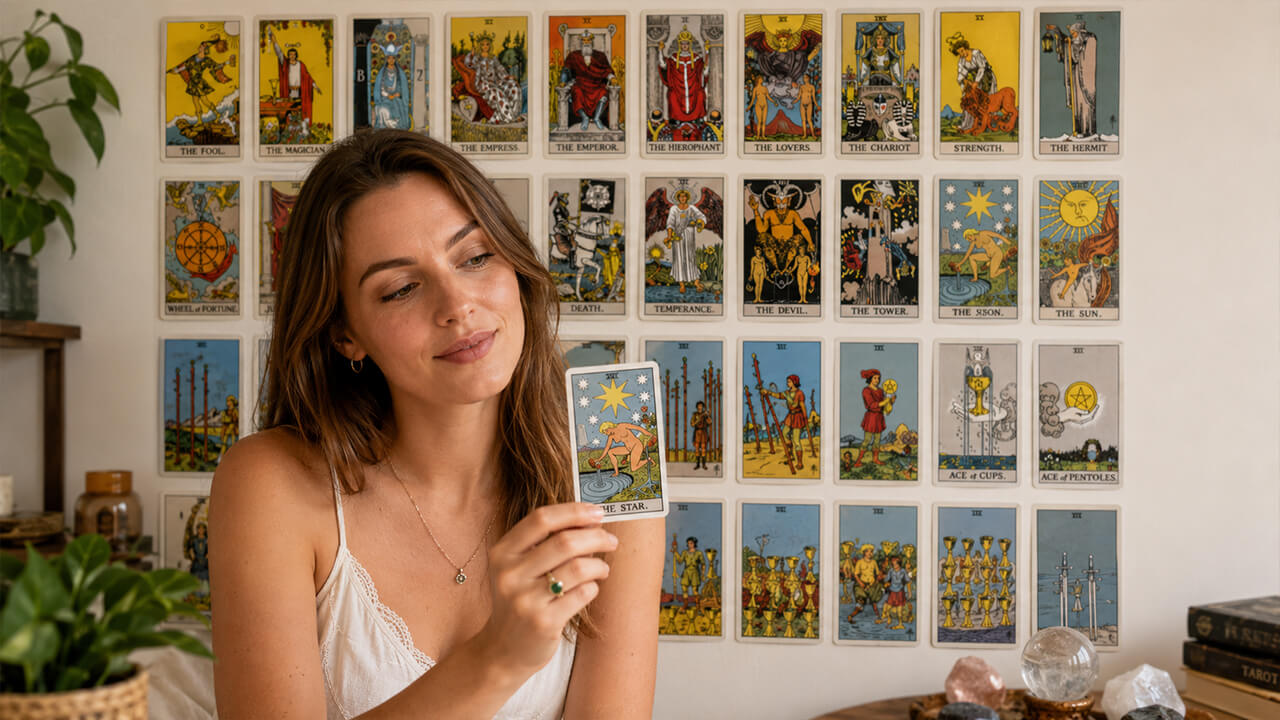
A standard tarot deck contains 78 cards.
Twenty-two cards belong to the Major Arcana.
The remaining fifty-six belong to the Minor Arcana.
The Major Arcana begins with the Fool, usually numbered 0, and ends with the World, numbered 21. These cards include familiar figures such as the Magician, the High Priestess, the Empress, the Hermit, Death, the Star, and Judgment.
They tend to describe larger developmental themes.
A belief changes.
A role reaches its limit.
A person recognizes something they can no longer ignore.
A decision alters the direction of a relationship, career, or private life.
The Minor Arcana is divided into four suits: Wands, Cups, Swords, and Pentacles.
Each suit contains fourteen cards.
There are ten numbered cards, beginning with the Ace and ending with the Ten. Four Court Cards follow: Page, Knight, Queen, and King.
The Minor Arcana stays closer to daily experience.
It describes the email that was misunderstood, the conversation that keeps being postponed, the money needed to support a plan, or the emotional response that appears before someone knows what to do with it.
This difference is sometimes summarized as major events versus minor events.
That is too simple.
A Minor Arcana card can describe something with serious consequences. The Three of Swords may appear around grief, betrayal, or a painful truth. The Ten of Wands may describe a level of responsibility that has become physically and emotionally unsustainable.
A Major Arcana card can appear in a quiet period.
The Hermit may describe several months of private study. Temperance may show a gradual adjustment that nobody outside the person notices. Justice can concern a decision made through paperwork rather than a dramatic confrontation.
The difference is mainly one of scale and function.
Major Arcana cards show the larger lesson, transition, or condition organizing the experience.
Minor Arcana cards show the form it takes in daily life.
Imagine a reading about someone who feels trapped in an exhausting job.
The Devil may describe the larger attachment. The person could be staying because income has become tied to self-worth, because fear has made every alternative look impossible, or because being needed has become part of their identity.
The Eight of Pentacles might show the repeated work keeping the situation in place.
The Four of Cups could describe emotional disengagement.
The Knight of Swords may show the urge to quit immediately after months of silence.
The Major card names the larger structure.
The Minor cards show the behavior, emotion, and practical conditions inside it.
The Minor Arcana often makes the Major Arcana understandable.
Without those supporting details, a reader can turn one large symbol into almost any story.
The Major Arcana Describes Turning Points and Larger Patterns
Major Arcana cards tend to carry more weight in a reading because they point toward themes that extend beyond one isolated event.
They often appear when the person’s usual way of responding is no longer enough.
The situation asks for a change in perspective, identity, responsibility, or direction.
The Fool concerns entering an experience before the full outcome is known. It can describe openness and risk. It can also show a lack of preparation.
The Magician concerns intention, skill, communication, and the use of available resources. It may show that the person can act. It can also raise questions about whether presentation has replaced substance.
The High Priestess concerns silence, private knowledge, intuition, and information that has not yet become visible. She does not automatically prove that someone is hiding a secret. Sometimes the person asking the question already senses what matters but keeps searching for outside confirmation.
The Empress concerns growth, pleasure, creativity, care, and the conditions that allow something to develop. She can describe support. She can also ask whether one person has become responsible for keeping everything alive.
The Emperor concerns structure, authority, limits, and order. In one reading, he represents dependable leadership. In another, he shows control that no longer allows adaptation.
The Lovers is associated with attraction and connection, but choice is equally important. Two people can care for each other while moving toward different lives. The card asks whether desire, values, and decision are still aligned.
The Chariot concerns movement, direction, and the effort required to keep competing forces under control. Progress is possible, though progress forced through willpower alone may become difficult to sustain.
Strength concerns courage, restraint, patience, and the ability to remain present without making force the only available response.
The Hermit concerns reflection, study, solitude, and the search for an answer that cannot be rushed. Distance can help someone understand what they feel. It can also become a way of avoiding participation.
The Wheel of Fortune concerns cycles, changing conditions, timing, and the part of life that cannot be managed through effort alone.
Justice brings attention to evidence, fairness, accountability, and consequence. It often appears when someone wants reassurance but the situation requires an honest decision.
The Hanged Man concerns suspension and a change in perspective. The usual action has stopped producing movement. Waiting becomes useful only when it allows a different understanding to emerge.
Death concerns endings and transformation. It rarely needs to be read as physical death. More often, it shows that an existing form has reached its limit.
Temperance concerns adjustment, proportion, patience, and the gradual combination of needs that do not automatically fit together.
The Devil concerns attachment, compulsion, shame, power, and the agreements people continue making after the cost has become clear.
The Tower concerns disruption and exposure. A structure, belief, or arrangement can no longer support what has been built on it.
The Star concerns hope, recovery, and the ability to imagine a future after something has been damaged or stripped away.
The Moon concerns uncertainty, instinct, memory, fear, and information that cannot yet be seen clearly.
The Sun concerns visibility, vitality, clarity, and direct experience. It can bring joy. It can also reveal something a person had preferred to leave unnamed.
Judgment concerns recognition and response. The person can no longer claim not to know what they already understand.
The World concerns completion, integration, and the closing of a cycle.
These cards do not need to predict one specific event.
A Death card in a relationship reading can describe the end of the relationship. It can also describe the end of an old agreement within a relationship that continues.
The Tower can coincide with a sudden event. It can also describe the moment someone admits that a situation has been unstable for a long time.
The Lovers can appear when a relationship begins. It may also appear when someone has to choose between maintaining a connection and remaining faithful to their own values.
The Major Arcana becomes less useful when each card is turned into a fixed prediction.
The cards describe conditions.
They show what kind of human experience has become central. The surrounding Minor Arcana cards help explain how that condition is currently operating.
A reading with several Major Arcana cards can suggest that the question touches a larger transition.
Still, the number of Major cards does not prove that the event is destined or beyond influence.
It may mean the person is confronting a pattern that has appeared in several forms.
The response still matters.
The Minor Arcana Shows Where the Pattern Is Happening
The Minor Arcana brings the reading into daily life.
Its four suits describe different areas of experience.
Wands are associated with fire.
They concern action, desire, creativity, motivation, ambition, attraction, and the energy needed to begin or continue something.
A reading with many Wands can feel active. There may be enthusiasm, competition, impatience, or too many plans demanding attention at once.
The Ace of Wands describes an opening or impulse.
The Three of Wands can show expansion and waiting for earlier action to produce results.
The Five of Wands concerns friction, competition, or several people pushing in different directions.
The Ten of Wands shows responsibility reaching a point where success and burden have become difficult to separate.
Cups are associated with water.
They concern emotion, intimacy, memory, imagination, attachment, and the ways people give or receive affection.
The Ace of Cups can describe emotional openness.
The Two of Cups concerns mutual recognition and connection.
The Five of Cups brings attention to disappointment and loss.
The Seven of Cups concerns possibility, imagination, and the difficulty of choosing among options that have not yet been tested.
The Ten of Cups describes emotional belonging, shared happiness, or an image of the life someone hopes to create with others.
Cups do not automatically mean romance.
A Cups-heavy reading can concern friendship, family, creative work, grief, emotional healing, or the person’s relationship with their own feelings.
Swords are associated with air.
They concern thought, language, information, conflict, anxiety, decisions, and the meaning people create from what they know.
The Ace of Swords concerns clarity or a new understanding.
The Two of Swords can describe a decision being delayed to preserve temporary peace.
The Three of Swords concerns pain, separation, or a truth that cannot be made comfortable.
The Eight of Swords can show a person feeling trapped by assumptions, fear, or incomplete information.
The Ten of Swords describes an ending that has become impossible to deny.
Swords are sometimes treated as negative because their images often include conflict.
Thought is not negative.
Clear language can end confusion. A difficult truth can stop a person from investing further in a false explanation. The suit becomes painful when thinking turns into fear, hostility, or constant interpretation without enough evidence.
Pentacles are associated with earth.
They concern money, work, time, health, the body, possessions, practical skill, and the material support required to keep something going.
The Ace of Pentacles can describe a practical opening.
The Three of Pentacles concerns cooperation, training, and the quality of work produced with others.
The Four of Pentacles can show saving and protection. It can also describe fear of loss becoming excessive control.
The Eight of Pentacles concerns practice and repeated effort.
The Ten of Pentacles brings attention to long-term stability, family resources, inheritance, and structures meant to last beyond one immediate decision.
Pentacles are often mistaken for money cards alone.
They also describe time.
A relationship can have emotional warmth but lack the time needed to develop. A creative project can have strong inspiration but no schedule, equipment, or income supporting it.
Pentacles ask whether the situation has a workable physical form.
The numbered cards describe how the suit develops.
Aces begin.
Twos introduce balance, division, or interaction.
Threes bring development and the involvement of additional factors.
Fours create stability, though stability can become restriction.
Fives introduce tension or the recognition that the current arrangement has a cost.
Sixes concern adjustment, exchange, or movement away from earlier difficulty.
Sevens bring evaluation and uncertainty.
Eights involve repetition, movement, skill, or restriction.
Nines approach completion.
Tens show what has accumulated.
The Court Cards add people, attitudes, and roles.
Pages are connected with learning, messages, curiosity, and early development.
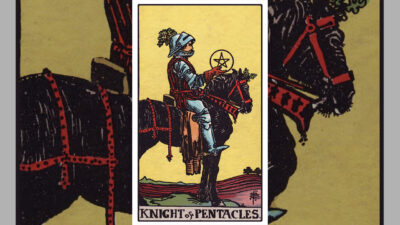
Knights pursue the suit’s objective. They bring movement, though movement can become impulsive or inconsistent.
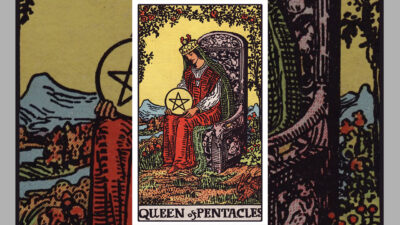
Queens tend to show an internal command of the suit. They understand how to hold and use its qualities.
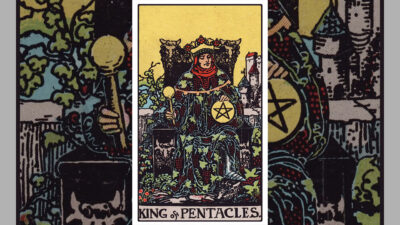
Kings tend to direct the suit outwardly. They take responsibility for how its qualities affect a wider situation.
These cards are not limited by gender.
A woman can appear as the King of Pentacles.
A man can appear as the Queen of Cups.
The function matters more than the figure’s title.
A Court Card can describe an actual person. It may also describe the attitude the person asking the question is using.
The Knight of Swords can be a fast-speaking colleague.
It can also show the reader’s own urge to send a message before checking whether the facts are complete.
The Queen of Pentacles can describe a practical, reliable person. She can also show that the situation needs care expressed through time, money, food, rest, or consistent effort.
Minor Arcana cards become especially useful when the question feels vague.
Someone asks why a relationship feels distant.
The Hermit may describe the larger theme of withdrawal or reflection.
A nearby Four of Pentacles can show emotional protection.
The Eight of Pentacles may indicate that work has taken most of the available time.
The Page of Cups can suggest that affection is still present but being expressed tentatively.
The Major card provides the larger frame.
The Minor cards show what is actually happening inside it.
The Difference Is Scale, Not Importance
Major Arcana cards tend to attract attention because their images feel final.
Minor Arcana cards often contain the detail that makes the reading practical.
A person asks whether they should leave a job.
They draw Death, the Six of Swords, and the Three of Pentacles.
Death suggests that the current form has reached its limit.
The Six of Swords shows movement away from strain.
The Three of Pentacles brings the question back to work, cooperation, skill, and the kind of professional environment that might function better.
Reading Death alone could produce fear.
Reading all three cards creates a more specific observation. Something about the existing arrangement appears finished. Leaving may be part of the process. The next stage still requires attention to the people, skills, and working conditions involved.
A reading dominated by Major Arcana can feel larger than the original question.
Someone asks about a disagreement with a friend and draws Justice, Judgment, and the World.
The issue may involve more than one argument. It can concern a long pattern of accountability, a truth that has become impossible to avoid, and the completion of an old form of the friendship.
That still does not decide whether the friendship must end.
The cards may describe the end of avoiding the issue.
A reading dominated by Minor Arcana can show that the situation is more workable than it feels.
A relationship question produces the Two of Swords, the Eight of Pentacles, and the Page of Cups.
No Major Arcana card appears.
The difficulty may be less about fate and more about postponed conversation, the effort needed to build trust, and affection that has not yet found a confident form.
The absence of Major Arcana does not make the reading unimportant.
It suggests that daily choices and communication are carrying much of the situation.
The proportion of cards can also be useful.
Many Cups may show that emotion is guiding the interpretation.
Many Swords may indicate that thought, conflict, or language has become central.
Many Pentacles can bring the reading toward money, work, time, health, and physical conditions.
Many Wands can show strong momentum, desire, competition, or exhaustion from trying to keep too many things moving.
A spread containing several Court Cards may involve multiple people. It can also show that the question is really about roles.
Who keeps initiating?
Who waits?
Who manages the emotional atmosphere?
Who carries the practical responsibility?
These patterns are often more useful than asking which card is good or bad.
The Major Arcana and Minor Arcana are not competing systems inside the deck.
The Major Arcana gives the experience a larger name.
The Minor Arcana shows its location, behavior, and immediate cost.
The Tower can describe a structure becoming impossible to maintain.
The Five of Pentacles shows the financial or practical insecurity surrounding that change.
The Two of Cups shows which relationship is involved.
The Queen of Swords shows the need for a direct and carefully defined conversation.
Once both levels remain visible, the reading becomes less theatrical.
It also becomes harder to use one dramatic card as a substitute for observing the real situation.
The question is no longer whether a Major Arcana card is more powerful than a Minor Arcana card.
The useful distinction is what each one has been asked to explain.
Sandy Tide Readings
Divination content designer based in Japan. I share astrology content and original divination content inspired by horoscopes, numerology, and planetary placements.
About Sandy Tide Readings ↗