In this article
Tarot is often introduced as a way to find out what will happen next.
Someone asks about a relationship, shuffles the deck, and waits for one card to provide a clear answer. The Lovers looks promising. Death looks alarming. The Tower can make an ordinary concern feel like a warning that something is about to collapse.
For example, a woman asks whether the person she is dating will commit to her.
She draws the Hermit.
The image shows a solitary figure holding a lantern. She searches for its meaning and finds words such as withdrawal, isolation, reflection, and distance.
Within minutes, the card becomes a description of the other person. He must be pulling away. His slower replies now seem deliberate. A quiet weekend becomes evidence that the relationship is ending.
The card may have pointed toward distance.
It may also have described her own need to step back from constant interpretation. It could have referred to a relationship that needs more private thought before the next conversation. The same image can speak to several parts of one situation.
The burden begins when a card is treated as a fixed verdict.
Tarot then stops helping someone observe a pattern. It starts replacing observation with fear, hope, or whichever meaning appeared first in an online search.
A tarot deck has more structure than a collection of mysterious pictures. The cards belong to different groups. Numbers repeat. Suits describe different areas of experience. Court cards add roles, attitudes, and ways of responding.
Before deciding what one card predicts, the first place to begin is with the structure of the deck itself.
A Tarot Deck Has 78 Cards With Different Jobs
A standard tarot deck contains 78 cards.
Twenty-two belong to the Major Arcana.
The remaining fifty-six form the Minor Arcana.
These two groups do not carry the same weight in a reading.
The Major Arcana usually points toward larger themes. Identity changes. Turning points. Beliefs that no longer fit. Choices that alter how a person sees themselves or the situation around them.
The Minor Arcana stays closer to ordinary life.
A conversation.
A payment.
A disagreement.
A period of waiting.
A plan that needs more effort than expected.
This does not make the Minor Arcana less important. Daily life is where larger themes become visible.
A person may draw Justice as a central card, suggesting accountability, balance, truth, or a decision with consequences. A nearby Two of Pentacles can show how that issue is appearing in practice. The person may be trying to manage two financial responsibilities, two work roles, or two choices that cannot both continue in their current form.
Justice gives the larger subject.
The Two of Pentacles shows the moving parts.
Tarot decks also share a basic visual language, though the artwork changes from deck to deck.
Many modern decks follow the structure made familiar by the Rider-Waite-Smith tradition. The Minor Arcana cards contain illustrated scenes rather than only suit symbols. A reader can study posture, direction, color, distance, and interaction between figures.
Other decks use different imagery.
A card may look gentle in one deck and severe in another. The title and traditional position remain important, but the artwork changes the emotional entry point.
This is why readers often choose decks they can actually understand.
A beautiful deck is not always an easy deck to read. If every card uses highly abstract art, the reader may need to rely heavily on memorized definitions. A more direct visual deck gives the eye something to notice before the mind reaches for a fixed meaning.
The question also changes what the card is doing.
The Eight of Cups in a reading about work may describe leaving a role that no longer feels meaningful. In a reading about grief, it may show the emotional difficulty of continuing life after something important has ended. In a reading about a current relationship, it can point toward emotional withdrawal, a need for distance, or the recognition that an old way of relating is finished.
The card has a stable range of meanings.
The situation decides which part of that range becomes relevant.
A useful reading therefore considers the card, its position in the spread, the original question, and the cards around it.
One card can carry information.
It rarely carries the whole story.
The Major Arcana Describes Larger Stages of Experience
The Major Arcana begins with the Fool and ends with the World.
The cards between them are sometimes read as a sequence of development. The Fool enters experience without knowing the full route. Along the way, the person encounters desire, authority, choice, loss, uncertainty, responsibility, and change.
The sequence can be useful.
It should not be treated as a rigid ladder.
Someone can experience the Tower before feeling prepared. They can return to the lessons of Strength many times. The World can mark completion in one part of life while another part remains unresolved.
Each Major Arcana card describes a recognizable human condition.
The Magician concerns intention, skill, communication, and the ability to use available resources. It can show initiative. It can also ask whether someone is directing their ability honestly or using presentation to create an impression that the facts do not support.
The High Priestess concerns inner knowledge, privacy, silence, and information that has not yet become visible. She does not always mean that a secret is being hidden by another person. Sometimes the person asking the question already senses the answer but keeps searching for external confirmation.
The Empress concerns growth, care, pleasure, creativity, and the conditions that allow something to develop. Her presence can feel reassuring. It can also raise practical questions. What is being fed? Who is providing the care? Has support become so constant that the other person never needs to participate?
The Emperor concerns structure, authority, order, limits, and responsibility. In one reading, this can describe stable leadership. In another, it can show rigidity or a need to control the outcome.
The Lovers is often mistaken for a guaranteed romantic result.
The card does concern connection and attraction. It also concerns alignment and choice. Two people may care about each other while holding values that lead toward different lives. The card can ask whether desire and decision are moving in the same direction.
The Chariot concerns movement, will, and the ability to keep opposing forces under direction. It can show progress. It can also describe a person forcing movement because stopping would require them to admit that the plan needs revision.
Strength is quieter.
It concerns courage, restraint, patience, and the ability to remain present without turning every challenge into a contest. The card does not ask someone to tolerate mistreatment. It asks what kind of strength the situation actually requires.
The Hermit concerns reflection, distance, study, and the search for an answer that cannot be rushed. It can describe loneliness. It can also show useful solitude. The difference depends on whether the distance is helping someone understand the situation or helping them avoid it.
The Wheel of Fortune concerns changing conditions, timing, repetition, and the limits of personal control. It can mark an opportunity. It can also show that a familiar cycle is returning in a different form.
Justice brings attention to truth, accountability, fairness, evidence, and consequence. It often appears when someone wants an emotional answer but the situation requires a clear decision.
The Hanged Man concerns suspension and a change in perspective. The usual action does not work. Waiting can become useful if it allows a different understanding to emerge. It becomes unhelpful when the person uses reflection to delay a choice they already understand.
Death represents ending and transformation.
It rarely needs to be read as literal death. More often, it shows that an existing form cannot continue unchanged. A job ends. A role loses its meaning. A relationship enters a phase where the old agreement no longer works.
Death can feel frightening because it does not promise that the next stage will arrive immediately.
Something can be finished before the person knows what will replace it.
Temperance concerns proportion, adjustment, patience, and the gradual combination of elements that do not automatically work together. The card often appears when the situation requires less intensity and more calibration.
The Devil concerns attachment, compulsion, shame, power, and the agreements people continue making even after they recognize the cost. It can describe desire. It can also describe the story that keeps someone convinced they have no choice.
The Tower concerns disruption, exposure, and a structure that can no longer support what has been built on it.
It does not mean that every part of life will collapse.
The card asks which assumption, arrangement, or image has become impossible to maintain. The disruption can be painful. It can also stop someone from investing further in a structure that was already failing.
The Star comes after the Tower.
It concerns hope, openness, recovery, and the ability to imagine life beyond the immediate damage. It is not a promise that everything will become easy. It describes a point where the person can respond without pretending that nothing happened.
The Moon concerns uncertainty, instinct, fear, memory, and information that cannot yet be seen clearly. It can indicate confusion. It can also show that the person is reacting to a real feeling before they have enough facts to explain it.
The Sun brings clarity, energy, visibility, and direct experience.
Even this card is not a universal yes.
The Sun reveals. That can feel joyful when the truth supports what someone hoped. It can feel uncomfortable when greater visibility removes an excuse or makes a hidden problem obvious.
Judgment concerns recognition, reckoning, and the moment when a person can no longer claim not to know what they know. It often asks for a response to the past rather than another explanation of it.
The World concerns completion, integration, and the closing of a cycle.
Completion does not always mean celebration.
Finishing a long period can bring relief and grief together. The person has reached the end. They also have to live without the role, problem, or goal that organized their attention for so long.
The Major Arcana becomes useful when the cards are read as conditions a person is moving through.
They are not characters arriving to reward or punish them.
The Minor Arcana Brings the Reading Into Daily Life
The Minor Arcana contains four suits.
Wands are commonly linked with fire.
Cups are linked with water.
Swords are linked with air.
Pentacles are linked with earth.
These associations create a practical division.
Wands concern action, motivation, creativity, ambition, desire, and the energy required to begin or continue something.
Cups concern emotion, attachment, intimacy, memory, imagination, and the way people receive or withhold affection.
Swords concern thought, language, conflict, decisions, anxiety, and the stories people build from available information.
Pentacles concern money, work, the body, time, possessions, skill, and the material conditions that make a plan sustainable.
A relationship reading can contain all four suits.
Wands may show attraction and momentum.
Cups may describe emotional closeness.
Swords can reveal what is being said, avoided, or overthought.
Pentacles can show whether the relationship has enough time, stability, and practical effort to continue.
Love does not operate only through Cups.
A couple can have strong emotional attachment and still disagree about money. They can have physical attraction but no shared plan. They can communicate constantly while avoiding one practical decision.
The suits stop a reading from becoming too abstract.
They show where the issue is living.
The numbered cards run from Ace through Ten.
Aces usually indicate beginnings, openings, or the concentrated potential of the suit.
An Ace of Wands can show a new impulse, idea, attraction, or creative opening. It does not guarantee that the idea will be completed. It shows that the energy to begin is present.
The Ace of Cups can describe emotional openness, affection, healing, or a feeling that has room to develop. It does not automatically mean a new relationship. The opening may concern self-trust, friendship, creativity, or the ability to receive support.
Twos introduce relationship, choice, balance, or divided attention.
The Two of Swords often appears when someone is trying to preserve temporary peace by refusing to decide. The card does not always mean that no answer is available. The person may be avoiding the consequence of choosing it.
Threes bring development, expression, or the involvement of more than one factor.
The Three of Cups can show friendship, support, celebration, or a social environment. In some relationship readings, it can raise questions about a third person. That meaning should not be imposed without support from the question and surrounding cards.
Fours concern stability, limits, consolidation, and the point where protection can become restriction.
The Four of Pentacles can show saving, holding, or protecting resources. It can also describe fear of loss so strong that nothing is allowed to circulate.
Fives often introduce tension, change, conflict, or the recognition that the current arrangement has a cost.
The Five of Cups focuses attention on disappointment and what has been lost. The card also contains what remains. It does not ask someone to ignore grief. It asks whether grief has narrowed the view so completely that available support can no longer be seen.
Sixes often involve adjustment, recovery, exchange, or movement away from an earlier difficulty.
The Six of Swords can describe leaving a stressful period. The movement may be necessary before it feels emotionally satisfying.
Sevens involve evaluation, uncertainty, strategy, or several possibilities.
The Seven of Cups can show imagination and choice. It can also show that possibilities are being enjoyed without being tested.
Eights concern movement, repetition, skill, restriction, or the consequences of a pattern becoming established.
The Eight of Pentacles points toward practice and careful work. It can support a long-term project. It can also ask whether someone is improving the right skill or simply staying busy.
Nines often show a condition approaching completion.
The Nine of Wands can describe persistence and boundaries after repeated strain. It can also show someone expecting the next injury before anything has happened.
Tens bring the suit to its fullest expression.
The Ten of Cups concerns emotional belonging, shared happiness, and the image of a fulfilling connection. The Ten of Wands shows responsibility reaching a point where success and burden have become difficult to separate.
The cards are not arranged from bad to good.
They describe how a subject develops.
An Ace begins.
A Ten shows what has accumulated.
The Court Cards add another layer.
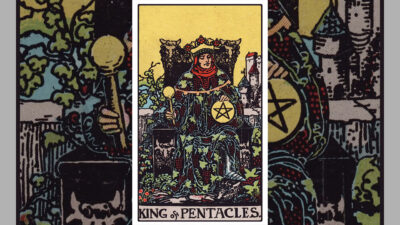
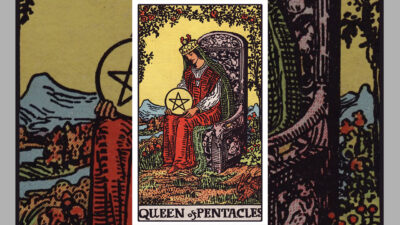
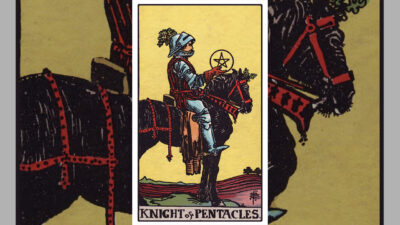
Each suit contains a Page, Knight, Queen, and King.
They can describe people.
They can also describe roles, levels of experience, communication styles, or the response the situation requires.
Pages are associated with learning, messages, curiosity, and early development.
A Page of Pentacles can describe a student, a practical offer, or the need to treat an idea as something that requires training.
Knights bring movement and pursuit.
The Knight of Wands can be enthusiastic, adventurous, and quick to act. The same energy can lose interest once the situation requires consistency.
Queens tend to show an internal command of the suit.
The Queen of Swords understands boundaries, language, discernment, and the need to name what is true. She does not have to be cold. She may simply refuse to make confusion sound kinder than it is.
Kings tend to show outward direction and responsibility.
The King of Cups can remain emotionally present without allowing each feeling to control the decision. In a difficult position, he may manage the emotional atmosphere so carefully that his own feelings remain unavailable.
Court Cards are not restricted by gender.
A man can appear as a Queen.
A woman can appear as a King.
The card describes a function, not a rule about identity.
A Card’s Meaning Changes With Position and Context
Tarot meanings are not unlimited.
The Tower does not suddenly mean a peaceful afternoon because the reader prefers a softer answer. The Three of Swords does not become a marriage card simply because the question concerns love.
The cards have recognizable structures.
Context decides how those structures apply.
A spread gives each position a job.
One card may describe the current condition.
Another may show what is hidden.
A third can describe advice, an obstacle, or the likely direction if the existing pattern continues.
The same card changes according to its position.
The Four of Cups in a position describing the current state may show emotional disconnection, boredom, or difficulty receiving what is being offered.
In an advice position, it may suggest pausing before accepting something simply because it is available.
In a position describing an obstacle, it can show that disappointment has made the person less responsive to a real opportunity.
The card has not changed.
Its job in the spread has changed.
The surrounding cards matter as well.
The Two of Cups beside the Ten of Pentacles can describe a bond with the potential to develop through shared values, family decisions, or long-term planning.
The Two of Cups beside the Seven of Swords raises a different issue. Connection may be present, but honesty, avoidance, or incomplete information also needs attention.
One favorable card does not erase a difficult card.
One difficult card does not erase affection.
The reading describes the relationship between them.
Reversed cards create another choice.
Some readers interpret a card differently when it appears upside down. A reversal can indicate blockage, delay, internalization, excess, avoidance, or a distorted form of the upright meaning.
The reversed Magician may show difficulty using available skills. It can also point toward manipulation or the gap between presentation and ability.
The reversed Four of Pentacles can describe releasing control. In another reading, it can show resources leaving too quickly.
Not every reader uses reversals.
A reader can find blocked or excessive expressions through the surrounding cards and positions without turning the deck upside down. Both approaches can work when the method is consistent.
The problem begins when reversals are used only to make an unwanted answer more favorable.
Consistency matters more than complexity.
Tarot also does not require a large spread.
A single-card reading can be useful for reflection when the question is focused.
A three-card spread can show a situation, its main pressure, and the next useful response.
A larger spread gives more detail. It also creates more opportunities to force unrelated cards into one story.
More cards do not automatically create more accuracy.
Sometimes they create more places for anxiety to hide.
The quality of the question matters more.
“Will I be happy?” is broad.
“What am I overlooking in my current approach to this relationship?” gives the reading a clearer task.
“Will I get the job?” asks for a prediction.
“What can I prepare before the next interview?” directs attention toward information the person can use.
Predictive questions are part of tarot.
They need proportion.
A reading can describe the direction of an existing pattern. If communication remains unchanged, the relationship may continue becoming more distant. If spending remains unchanged, financial pressure may increase.
This is different from claiming that one fixed event must happen.
People change their behavior.
New information arrives.
Other people make decisions.
The future remains connected with the conditions producing it.
Tarot Works Best When the Cards Return You to the Situation
Tarot can give language to something a person has felt but not yet named.
It can separate emotional fear from practical concern.
It can reveal that the same response is appearing in several parts of life.
It can also show when someone keeps asking new questions because the first answer was not the one they wanted.
The cards should bring attention back to the situation.
They should not pull the person further away from it.
If a reading suggests dishonesty, the next step is not to accuse someone based on a card. It is to look at what has been inconsistent, what information is missing, and which direct question needs to be asked.
If the reading suggests exhaustion, the person still needs to identify the source. The Ten of Wands can describe too much responsibility. It cannot decide which obligation should be released without knowing the life around it.
If the cards show attraction, that does not confirm commitment.
If they show difficulty, that does not make the relationship meaningless.
Tarot describes patterns of energy, behavior, expectation, and response. The people involved still have to live with the result of their decisions.
Repeated readings can weaken that responsibility.
Someone asks the same relationship question every evening.
The cards change.
The interpretation changes with them.
Hope rises with the Two of Cups. Fear returns with the Five of Pentacles. The person is no longer observing the relationship. They are observing the deck’s response to their anxiety.
At that point, another reading is unlikely to provide clarity.
The useful action may be to stop drawing cards and gather information from the relationship itself.
What has the other person actually said?
What agreement exists?
What behavior keeps repeating?
Which part remains a guess?
Tarot has limits.
It cannot diagnose illness.
It cannot verify pregnancy.
It cannot prove infidelity, criminal behavior, or another person’s private thoughts.
It cannot replace legal, medical, or financial advice.
It should not be used to frighten someone into dependence on repeated readings.
A responsible reading leaves room for uncertainty.
It distinguishes symbolism from fact.
It recognizes that a card can be accurate about the emotional pattern while the reader’s first explanation of that pattern is incomplete.
The cards are not empty.
They carry centuries of accumulated imagery, structure, and interpretation.
They are also not final authorities standing outside a person’s life.
A tarot reading becomes useful when it sharpens attention.
The Major Arcana shows the larger condition.
The Minor Arcana brings it into daily behavior.
The suits show where the issue is operating.
The numbers show how far the pattern has developed.
The Court Cards show how someone may be responding or which role is becoming necessary.
Once those parts are understood, the reading does not need to sound mysterious.
It can become specific.
There is affection here, but no shared plan.
There is a real opportunity, but the person has not prepared the practical structure to support it.
There is grief, and the attempt to rush past it is creating another problem.
There is attraction, but the available behavior does not yet show trust.
The card does not make the decision.
It helps identify what the decision is actually about.
Sandy Tide Readings
Divination content designer based in Japan. I share astrology content and original divination content inspired by horoscopes, numerology, and planetary placements.
About Sandy Tide Readings ↗